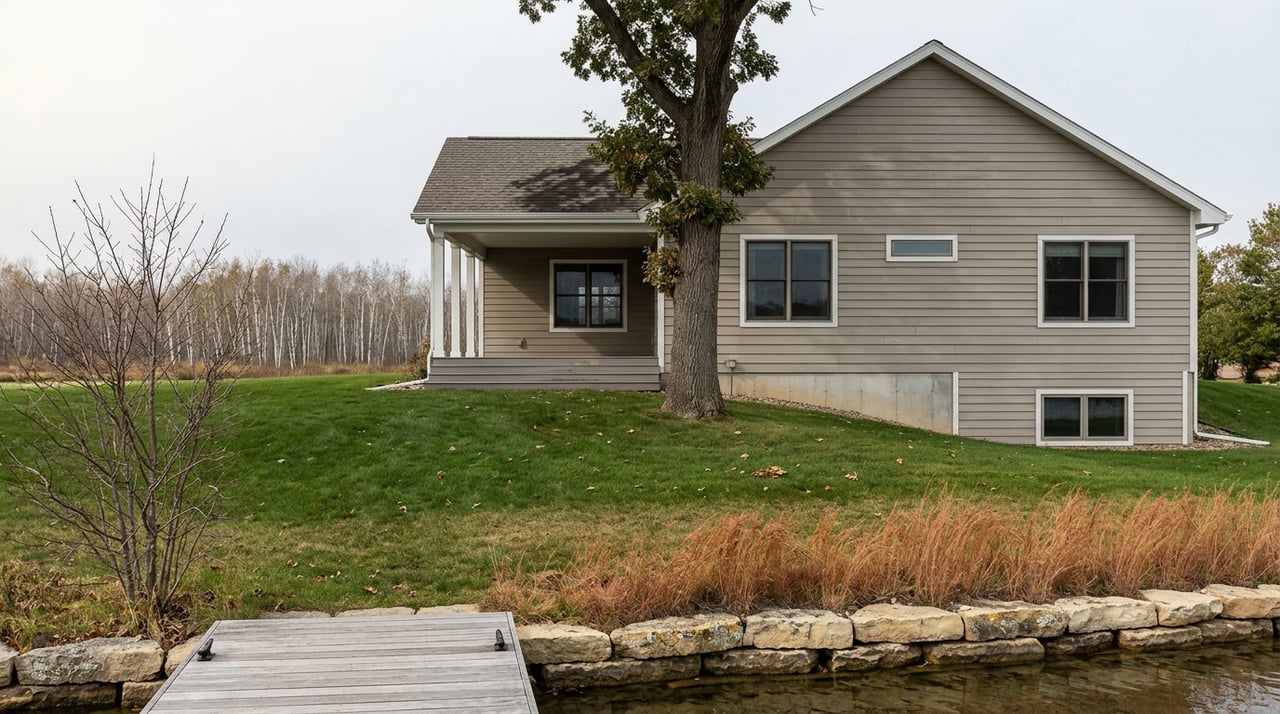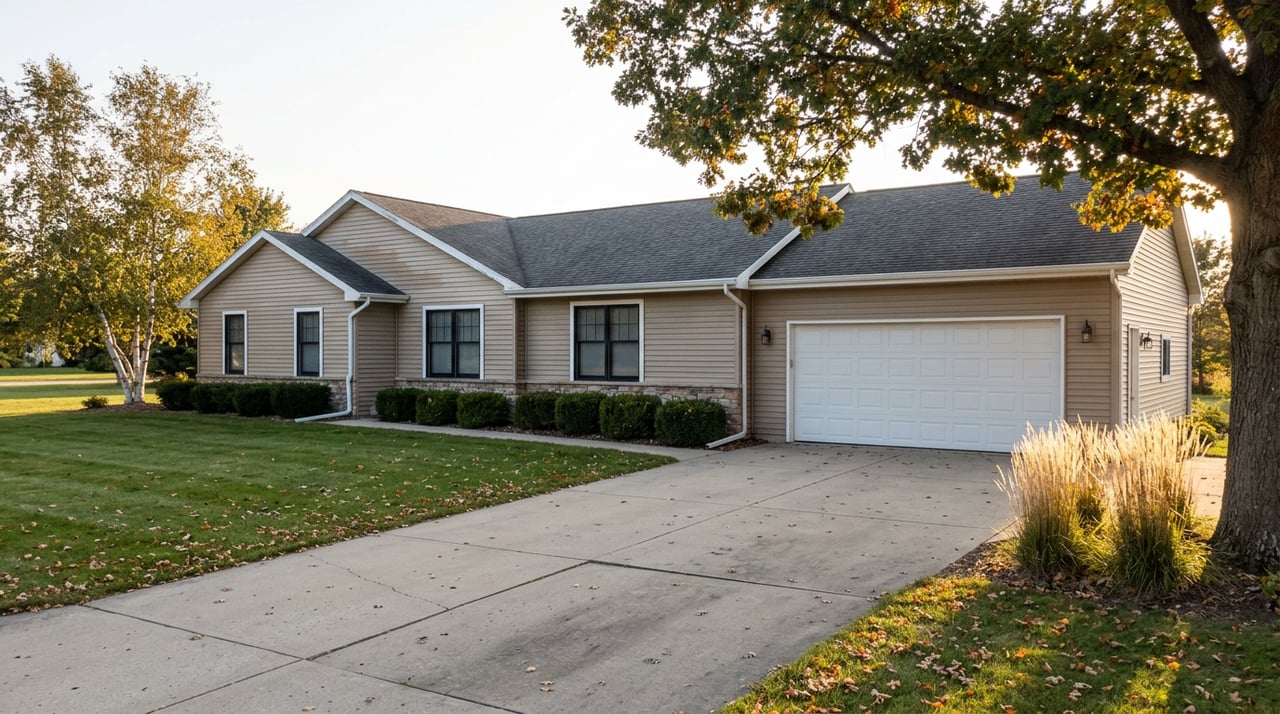
Blaine is extending city sewer and water into territory that has never had it. The push is heading north along Lexington Avenue, into land that has run on private wells and septic systems for decades. As a Blaine city official put it to Business In Focus Magazine earlier this year, describing the shift:
"city sewer and water will be extended to the north, which hasn't been the case"
That single sentence matters more to a buyer or seller closing on a well-and-septic home right now than most people realize, because it means the rules governing that property are in motion. But before any parcel gets touched by new pipe, everyone involved in the sale still has to get through two disclosures that most agents and buyers treat as a matched set: the well disclosure and the septic disclosure. They are not a matched set. One of them can stop your closing cold. The other, by design, cannot.
The Assumption That Doesn't Hold
Ask most people who have bought a rural-flavored lot in Blaine and they will describe the well and septic disclosures as two boxes checked on the same form, filed together, worried about equally, cured together if something turns up wrong. That is how the paperwork feels at the closing table. It is not how the law actually treats them.
The well disclosure certificate is governed by Minnesota Statute 103I.235. It has to be provided before the purchase agreement is signed, not at closing, and the enforcement mechanism is blunt: a county recorder cannot record a covered deed without either the certificate itself or a specific substitute sentence printed on the instrument. Skip it, and the sale legally cannot finish transferring title in the normal way.
The septic disclosure, covered by Minnesota Statute 115.55, subdivision 6, carries no equivalent teeth. The legislature went further than just leaving it out. Subdivision 7, paragraph c, specifically tells cities and counties they cannot use a local septic ordinance to hold up a recording. A bad septic disclosure will not stop your deed from being recorded. A missing well disclosure will.
That asymmetry is the whole point of this post. If you are buying or selling a well-and-septic property in Blaine, the two forms feel identical right up until something goes wrong, and then they behave completely differently.
| Well Disclosure | Septic Disclosure | |
|---|---|---|
| Governing statute | Minn. Stat. §103I.235 | Minn. Stat. §115.55, subd. 6 |
| When it's due | Before the purchase agreement is signed | Part of the disclosure package, no statutory pre-signing deadline |
| Recording leverage | County recorder cannot record the deed without it | Local governments are barred from using it to block recording |
| Buyer's claim window | Six years from purchase | Two years from closing |
| The present obligation | A well marked "not in use" must be sealed or hold a current maintenance permit, a duty that exists now, not just at sale | If a prior inspection report exists, it has to be attached to the disclosure even when the findings are bad |
Two rows in that table are worth sitting with. The claim window difference means a well problem a seller failed to disclose can surface as a legal issue up to six years after closing, while a septic problem has to be caught and acted on within two. And the attachment requirement on septic disclosures closes what would otherwise be an easy dodge: a seller cannot commission an inspection, get bad news, and then hand the buyer a bare "I don't know." If the report exists, it goes with the sale.
Where Blaine's Own Rule Goes Further Than the State's
State law does not require a septic inspection at the point of sale anywhere in Minnesota. Disclosure is mandatory. An inspection is not, unless a local ordinance says otherwise. In Hennepin County, for example, selling a home does not trigger a septic inspection requirement at all, only the disclosure itself.
Blaine chose the stricter path. The city's own septic information page states plainly that if you sell your property, a compliance inspection has to be performed by a qualified private septic inspector prior to the sale or transfer of ownership. That is a real gap-closer. The state's disclosure-only rule, paired with a two-year claim window and no recording leverage, leaves room for a system's true condition to slide past a rushed closing. Blaine's local ordinance does not leave that room. If you are selling a septic-served home in the city, the inspection is not optional paperwork you can skip and hope nobody asks about later.
The city layers on a second requirement that has nothing to do with sale timing at all: a licensed septic service provider has to file a maintenance reporting form with Blaine's Building Inspections Department at least once every three years, sale or no sale. A buyer who wants to know whether a system has been neglected does not have to wait for a pre-sale inspection to find out. The maintenance history is already supposed to exist on file with the city.
Why the Sewer Extension Changes the Calculation
None of this is static right now, because the ground it applies to is shrinking. As city sewer and water push north along Lexington Avenue for the first time, some of Blaine's well-and-septic parcels will become candidates for hookup to municipal service. That transition brings its own mechanic worth understanding before you make an offer or list a home in that corridor: cities in Minnesota routinely assess property owners for a share of the cost of extending utility lines to their parcel, and that cost typically shows up as a special assessment attached to the property, payable over a set number of years through the tax statement rather than as a single bill at closing. Blaine's own special assessments office keeps a record tied to each property's parcel identification number, and that record is something a buyer or their agent can and should check before writing an offer on land inside the expansion corridor, not after.
This is where an appraisal-trained read on a property earns its keep. A well-and-septic home just outside the new service line is not the same asset as one that has already been converted, and it is not the same asset as one that will convert next year under an assessment the current owner never disclosed because the notice arrived after the seller moved out. Reading which side of that line a specific parcel sits on, and what the pending assessment picture looks like, is exactly the kind of research that separates a rough estimate from a defensible number.
What to Actually Do About It
The mismatch between these two disclosures is not a reason to avoid a well-and-septic property in Blaine. Plenty of the city's larger, custom-lot parcels run on private systems and always will, sewer extension or not. It is a reason to sequence the paperwork correctly instead of treating both forms as interchangeable.
- Get the well disclosure statement before you sign the purchase agreement, not at closing. If the seller says there are no wells, get that in writing early, because the six-year clock on a wrong answer starts running from the sale, not from when you noticed a problem.
- Ask for the septic compliance inspection report as soon as it exists rather than waiting for it to surface during your own inspection period. Under Blaine's ordinance, the seller has to get one done before the sale closes anyway.
- Pull the septic maintenance reporting history from the city's Building Inspections Department. A system with a clean three-year filing history tells a different story than one with gaps.
- If the parcel sits near the Lexington Avenue expansion corridor, check the city's special assessment records for that PIN before you finalize an offer or set a listing price. A pending assessment changes the real cost of ownership even if it has not shown up on a tax statement yet.
- Know which clock applies. A septic issue you catch at year three is outside the statutory remedy window. A well issue you catch at year five is not.
None of these steps require a lawyer to execute, though the statutes themselves are worth reading in full if a specific disclosure raises a question you cannot resolve with a phone call to the city.
The Takeaway
The well disclosure and the septic disclosure look like twins because they sit on the same closing checklist and cover the same category of rural infrastructure. They are not twins. One has the power to stop a deed from recording. The other does not, and the legislature made sure it never will. Blaine's own ordinance closes part of that gap by requiring an inspection the state does not, but it does not change the underlying statutory asymmetry, and it does not freeze the map. As city utilities keep moving north, more of these parcels will face a hookup decision, a special assessment, or both, on top of the disclosure questions they already carry.
If you are weighing a purchase or a sale on one of Blaine's well-and-septic lots and want a clear read on where a specific parcel stands, from the disclosure paperwork to what the city's utility expansion might mean for that address, Maisa Olson offers a free valuation consultation built on appraisal-grade research rather than a generic comp pull.